Maury Hills Church Music and Worship Two
Revelation 16:2 And the first went,
and poured out his vial upon the earth; and
there fell a noisome and grievous sore upon
the men which had the mark of the beast, and
upon them which worshipped his image.
The Spirit OF Christ speaks in a spiritual sense only
to the Prophets: there He defined
the Church of Christ (the Rock) both
inclusively and exclusively.
Christ in the prophets
warns against the "Lying Pen of the
Scribes." That is because Act 7 and any reading of Exodus and Christ in
the prophets proves that God did NOT
command the Civil-Military-Clergy
complex, the
temple, animal slaughter or the
Levites who prophesied with
instruments meaning that they
were soothsayers used interchangeably with
sorcerers such as the
self-speakers, singers and
instrument players in
Revelation 18 whom John
consigned to be cast alive
into the Lake of Fire.
Jesus
called the Scribes and Pharisees, hypocrites. In the Ezekiel
33 version He named self-speakers violating Isaiah 58, singers
and instrument players. Christ left this as the MARK of men
who will not or cannot obey the command to PREACH the Word
(only) by READING the Word while others REST from the laded
burdens (rhetorical or musical performances) or the Burden
Laders. To that end, the Gift of the Spirit of Christ
was to COMMAND that godly elders silence all of the cunning
craftsmen or SOPHISTS:
A Sophist is a usurping speaker who speaks and demonstrates
his SELF, a singer, instrument player, actor or dancer: dance
is implicit in the music word which is not remotely hinted of
in the never-instrumental commands to SPEAK the Biblical text.
The Command in Ephesians 5 is that the ODE and PSALLO be
SILENT.
1Corinthians 14:28 But if there be no interpreter,
[translator)
let him keep silence
in the church;
and let him speak to himself,
and to God.
Musical Instruments are LIFELESS INSTRUMENTS or
CARNAL WEAPON. They are defined as a TONGUE by people who
fulfill the meaning of music or mystery "to make the lambs
dumb before the slaughter." They did that to Jesus by mocking
him instrumentally.
Corinthians 13:1 Though I speak with the tongues
of men and of
angels,
(condemned)
and have not charity,
(Grace) (condemned)
I am become as sounding
brass, or a tinkling cymbal.
The LOCUSTS were Muses led by Abaddon or Apollyon who HAS been
unleashed as the musical worship leaders:
La^l-eō, Mark of the
Locusts II. chatter, Opposite. articulate
speech, as of locusts, chirp, Theoc.5.34; mesēmbrias lalein tettix (sc. eimi), a very grasshopper
to chirp at midday, III.
of musical sounds, “aulō [flute] laleō” Theoc.20.29; “di'aulou [flute] ē salpiggos l.”[trumpet]
Arist. Aud.801a29; of Echo,
magadin lalein sound the magadis, [double flute]
"It may help us to understand that
the Greek word lelein refers primarily to utterance
rather than to meaningful conversation. The
term is used repeatedly in chapter 14 to describe
speaking in tongues. Phrynichus, the
ancient dictionarian, defined the term as 'to
talk nonsense'.
The word is used of gossip, prattling, babbling,
animal sounds, and
musical instruments. During the
classical period, it usually was employed in a contemptuous
sense. Debrunner, writing in the Kittle-Friedrich
Theological Dictionary of the New Testament, states
'Lalein can also be used quite objectively of speech
when there is reference to sound rather
than than meaning. 'To what kind of utterance
can St. Paul refer? There were many types of
vocalization in ecstatic rites.
They have been heard to utter (different voices of
equal strength, or with great diversity and
inequality) in tones that alternated with silence;
and again in other cases harmonious crescendo or
dimenuendo of tone, and in still other cases other
kinds of utterance. (Iamblichus, On the Mysteries,
III, 4-6)
The Spirit OF
Christ is not ignorant: If He wanted you to
Flute people down with wine
or ridicule the fleecees, He would have named an instruments or as Simple Simon would have used
a necessary Compound word
for each instrument, style of playing or
including the ode
being sung:
-kat-auleô , A. charm by flute-playing, metaphor I
will flute to you on a
ghastly flute, E.HF871 (troch.):--Pass., of persons, methuôn
kai
katauloumenos drinking wine to
the
strains of the flute, Pl.R.561c;
k. pros chelônidos psophon to be played to on
the flute with lyre
accompaniment,
II. in Pass., [ton monochordon kanona]
parechein tais aisthêsesi . . katauloumenon subdued by a flute accompaniment, to be piped down, ridiculed, gelômenoi
2. make
a place sound with flute-playing, resound with flute-playing,
nêsos katêuleito Plu.Ant.56
There is no exception that when the Word, Logos (Regulative
Principle) is replaced by rhetoricians or "hypocritical
mockers at feasts" you are ALWAYS being attacked by sorcerers
or Nicolatains. Notice that those who get the victory
are agents of the Babylon Mother of Harlots working FOR the
Goddess of Victory. In Isaiah 33 Christ warned that when you
hear the sounds of wind, string or percussion instruments the
GODDESS worshipers have neutered you. See
Christ speaking through Isaiah 30.
Christ said that Lucifer (documented in many ancient texts) was
the Singing and Harp-Playing Prostitute in the Garden of Eden.
Then in Isaiah 30 He defined the PATTERN for His Rest both
inclusively and exclusively and said that the fleecees were
being driven into HELL: In Revelation for the end time the
"lusted after fruits" use the same instruments to mark the
REMOVAL of the Christ Confession, the Lamps or seven spirits OF
Christ (Isaiah 11) and being cast ALIVE into the Lake of
Fire. The IGNIS or the INCENTOR or musicl starter is also
called the FIRE STARTER: consuming resident spirits OF THE WORLD
by the the Breath (spirit) of their own mouth.
The Worship of the Starry Host at Tyre and Jerusalem was NOT
from God so that the Assyrians and Jews were bonded together: In
Hezekiah's plague-stopping exorcism used by the PATTERNIMSTS
commanding THEM to go and do likewise, the Levite Instrumental
noise makers were NOT clean enough even to go into any Holy
Place to clean out the garbage left over when the Assyrians
invaded the holy places with wine, women and instruments.
The text specificially says that the INSTRUMENTS were purged
from the temple while the sister shrines were burned down
INCLUDED the vessels or psalteries of the Assyrians: here is a
visual picture of anyone who has FALLEN into sowing discord and
offending or offering up the children for BURNING:
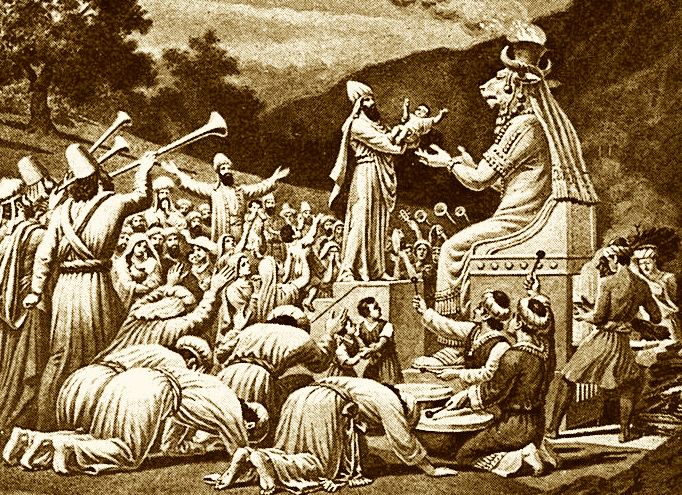
Paul
silenced the MEN
bringing on wrath or
ORGY and he
silenced the women
exercising authority
or AUTHENTIA which was
both EROTIC and
MURDEROUS. The
Authentes: They were
NOT safe in bearing
children because their
willingness to be
EXPOSED proves
that they were
involved in
devoting their
children to be
burned:
"The adored wife of the
fallen
Hector, is taken as a concubine by the authentes, who can command her domestic and
sexual
services.
The word also
occurs in a homosexual sense in a speech by Theseus, king of Athens, where love
of young boys was
considered a virtue rather than a vice." ( Charles
Trombly,
Who Said Women
Can't
Teach, p.
174)
"dionysus's
worship is thus established by the simple means of killing
the opposition. It has been suggested that every tragic hero who suffers and dies on stage
at the Dionysia, the great dramatic festival at Athens (of the South?),
is in fact dionysus himself, being
killed."
Since Maury Hills (ex Church of Christ) builds on the foundation of
Carroll D. Osburn etal:
Carroll D. Osburn
"Feminist hermeneutics stands
over
against patriarchal hermeneutics" its goal
achieved
"by small, often
unnoticed acts of subversion.
Numerous such incremental changes, like erosion, will
eventually bring
down the
fortress " (
p. 32).
Being taught
to expose people to "Christian Bands to teach our children to
leave our Movement" (Rick Atchley agent of the NACC) Paul's
warning does NOT give males including Elders to do ANYTHING
but teach that which has been
taught for our learning or
FEEDING.
I HAVE BEEN
INFORMED BY AN ELDER THAT THEY
HAVE THE AUTHORITY TO "OFFER" AN
INSTRUMENTAL WORSHIP
SERVICE. THEY CLAIM THAT
INSTRUMENTS ARE NEITHER
COMMANDED NOR PROHIBITED: THEREFORE,
THEY CAN SPEAK FOR JESUS
CHRIST NOT
KNOWING THAT THE USE OF
INSTRUMENTAL NOISE IS ONE
OF THEM MOST VIOLENT AND
PROHIBITED ACTIONS IN THE
BIBLE.
Did the word of God
originate with you? Or are you the only people it has
reached? 1
Corinthians 14:36
If anybody thinks
he is a prophet or spiritually gifted,
let him acknowledge that
what I am writing to you is the
Lord's
command. 1 Corinthians 14:37
If he ignores
this,
he himself will
be
ignored. 1
Corinthians
14:38
"Michael Clycas, the
Byzantine
historiographer, uses this verb to describe the woman, 'who make sexual advances
to men and fornicate as
much as they please without arousing their husband's
jealous.'"
(Charles
Trombly, Who
Said Women
Can't Teach,
p.
176)
Ephesus was famous for its shrine of
Diana,
where thousands of sacred prostitutes believed fornication
brought believers
into contact with deityin much the say way the Gnostics
used authentia to bind the flesh
and the divine
together. When these owm converted to
Christianity they had to unlearn these pagan practices.' Trombley, p.
177)
A pro-feminist author
nevertheless confesses: "By thrusting themselves forward as the originators or inspirers of religious hymns
or creative drama, the woman would be exercising sexual authority. This has nothing to do with
"authority
to speak" because non-inspired men noR
"senior male husbands" have no
more authority.
"Ephesus was famous for
its
shrine of Diana, where thousands of sacred prostitutes
believed
fornication brought believers into contact with deity in
much the
same way the Gnostics
used
authentia (authority) to bind the flesh and the divine
together. When
these women converted to Christianity they had to unlearn
these pagan
practices. 'Virtually without exception,
female teachers
among the Greeks were courtesans, such as Aspasia, who
numbered Socrates and Pericles
among her students. Active in every major school of
philosophy, these hetairai made it evident in the
course of their lectures that they were
available afterwards for a second occupation.
But the Bible teaches
that to
seduce
men in
such a manner
was indeed to lead them to slaughter and the halls of
death (cf.
Prov. 2:18; 5:5; 6:27; 9:18).
The verb
authentein is thus peculiarly apt
to describe both the
erotic and
murderous." (Trombley,
Who Says Women Can't Teach, p. 177).
Peter and others affirm
that Jesus of Nazareth m
ade these prophecies more perfect or affirmed.
Peter said that these prophecies
cannot (and will not) be
Private Interpreted: that
means "further expounded"
including anything as faith
and practice which Christ has
not detailed in infinite
detail as Prophetic Types.
Those who
interpret or further expound
or of elders "teach that
which has NOT been taught"
are false teachers.
That is
because they
DESPISE the Word of God
which Christ in Jeremiah
23 defines as BLASPHEMING
the Holy Spirit OF Christ.
2]
et abiit primus et effudit fialam suam in terram et factum est vulnus saevum ac pessimum in homines qui habent caracterem bestiae et eos qui adoraverunt imaginem eius
THE MARK OF THE BEAST
kharag-ma
kha^,
atos,
to,
(kharassō)
3. metaph., mark, stamp, character, “to
tēs
monados
sēmantikon
kh.”
T
sēman-tikos
,
ē,
on,
A.significant,
opp. “
asēmos,
onoma
esti
phōnē
s.
kata
sunthēkēn
aneu
khronou”
Arist.Int.16a19; “
rhēma
. . phōnē
sunthetē
s.
meta
khronou”
Id.Po.1457a14;
“
logos
. . esti
phōnē
s.
kata
sunthēkēn”
Id.Int.16b26, cf.
Stoic.2.48: c.
gen., “
s.
hugieias”
Arist.Top.106b36;
“
s.
pasēs
kakias”
D.S.3.4;
s.
orē
mountains
giving signs of the weather,
Thphr.Sign.51;
s.
parōtidōn
indicative of mumps,
Gal.17(1).405;
-ka
significant symptoms,
Hp.Praec.11.
Adv. “
-kōs”
Arist.Top.106b37:
c.gen.,
M.Ant.10.7:
Sup. “
-ōtata”
Longin.31.1.
sēmeion ,
to,
Ion.
sēmēion
, Dor.
sa_mēion
2.
sign from the gods, omen,
S.OC94;
“
ta
apo
tōn
theōn
s.
genomena”
Antipho 5.81,
cf.
Pl.Phdr. 244c,
Ap.40b,
X.Cyr.1.6.1;
wonder, portent,
LXX Ex.4.8,
al.; “
s.
kai
terata”
Plb.3.112.8,
Ev.Matt.24.24,
Ev.Jo.4.48,
cf.
IPEl.c.,
D.S.17.114;
“
phobēthra
kai
s.
ap'
ouranou”
Ev.Luc.21.11;
esp. of
the constellations, regarded as
signs,
“
duetai
sēmeia”
E.Rh.529
(lyr.), cf.
Ion 1157.
signal for battle, ta
s.
ērthē,
katespasthē,
Th.1.49,
63, etc.;
kathairein
to
s.
to take
it down, strike the
flag, as a
sign
of
dissolving an assembly, And.1.36;
to
tēs
ekklēsias
s.
Ar.Th.278;
8. watchword, war-cry,
Plb.5.69.8;
“
apo
s.
henos
epistrephein
tas
naus”
Th.2.90, cf.
X.HG6.2.28.
2. n Prosody and Music,
unit of time,
THE IMAGE
OF THE BEAST:
Imāgo , ĭnis,
f. cf. imitor, I.an imitation, copy
of a thing, Juv. 7, 29:
“hoc tibi sub nostra breve carmen imagine vivat,
I. Transf., a
reverberation of sound, an echo
(mostly poet.): “(mellaria facere oportet) potissimum ubi non resonent imagines,” Varr. R. R. 3, 16, 12:
“concava pulsu Saxa sonant, vocisque offensa resultat imago,” Verg. G. 4,
50; cf. Sil. 14, 365: “alternae deceptus imagine vocis: Huc coëamus ait ... Coëamus retulit Echo,” Ov. M. 3, 385:
“c
“hoc
tibi
sub
nostra
breve
carmen
imagine
vivat,”
Mart. 9, 1:
dulcis
, I. Trop., agreeable, delightful,
pleasant, charming, soft, flattering.
II. Trop., agreeable,
delightful, pleasant, charming, soft,
flattering.
THE BEAST COMING TO A CHURCH
NEAR YOU.
bestĭa
, ae, f. perh. akin to fera and to belua,
2 As a term of
reproach (cf. belua and our beast): “mala
tu
es
bestia,”
Plaut. Bacch. 1, 1, 21;
id. Poen. 5, 5, 13.—And,
humorously, of the odor of the armpits (cf. ala and caper),
Cat. 69, 8.—
mark of CAPPELLA
II Transf.,
as a constellation, the wotf, Vitr. 9, 4 (7)
cănis
(cănes
, Plaut. Men. 5, 1, 18;
id. Trin. 1, 2, 133;
I. As a term of reproach, to denote,
a. A shameless,
vile person,
Plaut. Most. 1, 1, 40;
Ter. Eun. 4, 7, 33
Donat. ad loc.;
Hor. Epod. 6, 1;
cf.
id. S. 2, 2, 56;
Petr. 74, 9;
Suet. Vesp. 13.
—
a. Tergeminus, i. e.
Cerberus.
Ov. A. A. 3, 322;
id. Tr. 4, 7, 16;
“
called
also
viperius,”
id. Am. 3, 12, 26:
“
Tartareus,”
Sen. Herc. Fur. 649:
“
triformis,”
id. Herc. Oet. 1202:
Echidnaea.
Ov. M. 7, 409;
cf.: “
infernae
canes,”
Hor. S. 1, 8, 35;
Verg. A. 6, 257;
Luc. 6, 733.
—
b. Semidei canes, Anubis, Luc. 8, 832.—
D. A Cynic philosopher: “Diogenes
cum
choro
canum
suorum,”
ekhidn-a
,
hē,
(
ekhis)
A.viper,
Hdt.3.108,
S.Tr.771,
Pl.Smp.218a,
etc.; prob. of a
constrictor snake, Act.Ap.28.3: metaph., of a
treacherous wife or friend,
A.Ch.249,
S.Ant.531;
himatismenē
e.,
of woman,
Secund.Sent.8;
gennēmata
ekhidnōn
brood
of vipers, term of reproach, in
Ev.Matt.3.7.
Paul said that worship was IN THE SPIRIT as a PLACE: this was
giving attendance to the Word only and would PREVENT the Dogs
or Catamites (elders as Wolves) from seeking whom he might
DEVOUR (a double entendre)
THE BEAST IN GREEK
thērion , to (in form Dim. of thēr), A. wild animal, esp. of
such as are hunted, mala gar mega thērion ēen, of a stag, Od.10.171,
180
(never in Il.); in Trag.
only in Satyric drama
Sikinnis
sikinn-i^s
si^,
or siki_nis
(E.Cyc.37),
idos,
A. “Sikinnin”
D.H.7.72:—Sicinnis, a
dance of Satyrs used in the Satyric drama,
S.Fr.772,
E. l.c., D.H.
l.c., Luc.Salt.22:
named from its inventor Sicinnus, Ath.1.20e, cf. Scamon 1; or from Sicinnis,
a nymph of Cybele, although originally
danced in honour of Sabazios,
Arr.Fr.106J.— Also
written Sikinnon
, to/, Suid.; Sikinna
,
Sa^bazios
, ho,
(Sabos)
a Phrygian deity, whose mysteries resembled the teletai
of Dionysus, Thphr.Char.27.8
(but Sabadion
[acc.] ib.16.4,
cf. Dessau Inscr.Lat.Sel.2189),
Nymphis 11; hence
afterwards taken as a name of Dionysus himself, Ar.V.9,
Av.875,
Lys.388;
A.“theō
Sabaziō
pagkoiranō”
CIG3791 (Bithynia),
cf. IG12(5).27
(Sicinus); “Di
Sabaziō”
The Jew's Covenant with Death and Hell was called
Sabazianism
Cybele or Kubebes: CII.
Kubêbês.
The ‘Great Mother’ goddess of the Phrygians worshipped at Pessinus, the mêtêr Dindumênê of i. 80. 1.
For the Anatolian ‘Great Mother’ cf. App. I. 2, Frazer, G. B.
iv, Bk. II, Attis, &c.; Ramsay, in Hastings' Bible
Dictionary, extra vol., p. 120 f. The Atys myth which involved her cult is
connected with Sardis by H.'s story of the son of Croesus (i. 34. 2 n.). The Great Mother was worshipped at Athens in the days of Sophocles (Phil. 391), and identified by the Greeks with Rhea, [EVE] mother of the gods (cf.
iv. 76; Strabo 469), with Aphrodite, with Demeter, and with Artemis as the lady of the wild woods. But
here she is regarded as a foreign goddess.
She is the facilitator or organon a musical
instrument of Rhea (Eve, Zoe)
Deilos cowardly, vile,
worthless, lowborn, mean
“hē mousikē aei ti kainon thērion tiktei”
mousikê
aei
ti kainon thêrion tiktei
A. Mousikos, musical,
agônes m. kai gumnikoi choroi te kai agônes ta mousika music,
II. of persons, skilled in music,
kuknos [minstrel] kai
alla zôia; peri aulous - professional
musicians, mousikos
kai melôn poêtês, use with
singing, skilled in speaking before a mob. Melody,
B.
aei always
C. kainos , esp.
of new dramas, the representation of the new
tragedies,
(Aphrodisias dedicated to Aphrodite (ZOE); comedy,
sexual love,
pleasure, a woman's form of oath, Aster
or Venus
or ZOE Lucifer
D. Therion
E. Tikto mostly of
the
mother of Rhea
one of
the zoogonic or vivific principles
sunestiōmenon,
of woman
Sunesti^-aō
, A. help to entertain, AP4.3.24 (Agath.):—Pass.,
live or feast along with or together, Lys.Fr.53.2, Is.3.70, D.19.190,
etc.; [theois]
Plu.2.121f; “meta
tinōn”
IG22.1214
Russ Adcox part two Biblical Considerations
9-22-13, Maury Hills Church
If you’re joining us for the first time today or you just
happened to miss last Sunday, I launched a new series on
Music & Worship. It’s a series that deals specifically
with why our leadership believes it’s time to start offering
both a cappella and instrumental worship services at
Maury Hills. I want to start by saying thank you for
your response to last week’s message. I was very encouraged
by the comments I received. Not all of them were in
agreement but all of them were kind and gracious and
sensitive to the way others felt about it. That’s no
surprise. I wouldn’t have expected anything different from
Maury Hills but I still appreciate it. The comments were all
across the board from “Yes, let’s go. I can’t wait!” to “No,
I’m not real comfortable with this right now” and everything
in between. That’s also not a surprise. Maury Hills is a
very diverse church so I was expected a diverse reaction.
Jenny and I are helping plant a new community group
this Fall and the majority of the people are new to Maury
Hills. We’re not actually doing the music study. We’re doing
some material that Tim asks new small groups to go
through, but last week someone in the group said, “Hey,
before we start our study can ask a question about the
message this morning?” I said “Sure.” “Well, I was just
wondering, is this really a big deal?” I thought he was
joking so I laughed. He said, “No, no, I’m being serious. I
was raised Catholic and I’m really asking is this a big
deal?” Someone else spoke up and said “I was wondering the
same thing. I mean obviously it is if you’re spending three
weeks on it, but is really that big of an issue?” You could
see the same question on other faces but there were three 3
people nodding “Yes, this is a really, really big deal!” And
I immediately knew who in the room grew up Church of
Christ and who didn’t.
It was really eye-opening because the latter group was in
the minority. Even though our sign says “a
church of Christ” we have folks here from all sorts of
different church backgrounds.
That's a false statement. The Pattern of folly was to Top
Load with elders and members who agreed with him. From the
beginning everyone knew the Russ Adcox agenda from his
divisive split of a church of Christ in Hohenwald. Churches
effective disfellowshipped Maury Hills. Russ made efforts to
court the Christian Churches and set out the hooks for anyone
ANTI Church of Christ: you can not be A Church of Christ and
use "machines for doing hard work mostly in making war and
creating the charismatic (Grace as erotic man-man favor) the
Bible and recorded history defines as SORCERY or Witchcraft
because it means "to make the lambs dumb before the
slaughter."
Sometimes we do something in our 101
class I illustrate it like this. I’ll ask you to participate
with a simple show of hands. How many of you grew up
with Church of Christ as your dominant church
background? And how many of you grew up with some other
background (Methodist, Pentecostal, Presbyterian, Baptist,
all of the above or none of the above) as your background?
That’s Maury Hills. We’re a diverse church and it’s easy to
forget that. People start thinking everyone feels the same
about this issue as me. They don’t. Some folks wonder how in
the world we hold it all together. It’s simple. We major
in the majors and don’t allow our opinions on lesser
issues to divide us. In other words, we’re united in Christ
despite any differences of opinion on worship style. We’ll
talk a lot more about that next week.
That's wonderful:
since Russ Adcox has assumed the role of Authoratative
Teacher usurping the role of Jesus Christ, he does not
know and God HIDES the fact that The Church of Christ (the
Rock) in the wildernesss specificially outlawed "vocal or
instrumental rejoicing including Russ' form of
rhetoric. Jesus called the Scribes and Pharisees,
Hypocrites by in Ezekiel 33 naming self speakers (sons of
the Devil says Jesus), singers and instrument players.
This week I want to ask the second question in our series.
Last Sunday we asked “Why?” Why do our leaders feel it’s
time to start moving in this direction? I answered that
from 1st Cor 9:19-23 and Acts 15:19. If you missed it
I’d really encourage you to go back and pick it up on the
website. Basically, we believe that offering both a cappella
and instrumental services will help us better reach our
community. This week we drop back and ask the second
question “Is Biblical? Is it OK to do this?” Let’s open our
Bibles.
1Corinthians
9:16 For though I preach the gospel,
I have nothing to
glory of: for necessity is laid upon me; yea, woe is
unto me, if I preach not the gospel!
1Corinthians 9:17 For if I do this thing willingly, I
have a reward:
but if
against my will, a dispensation of the gospel is
committed unto me.
1Corinthians 9:18 What is my reward then? Verily that,
when I preach the gospel,
I may make the
gospel of Christ without charge, that I abuse
not my power in the gospel.
Paul commanded Timothy the evangelist to
WORK so that he could sponsor the agape or feeding
workers before they went to a day job. This verse
TERMINATES preachers who refuse to GO and preach what
Jesus commanded to be taught and observed. Russ
Adcox stands condemned. A SERVANT means that while the
Jew was working Paul would go out and be his
SERVANT. Being masculine he would not be caught
dead singing, clapping and picking a guitar to SERVE a
Jew.
False teachers were demanding that
believers be circumcised and keep the law of
Moses. Moses did not include 'instrumental
worship' but the Scribes and Pharisees are defined as
hypocrites meaning preachers, singers and instrument
players in Ezekiel 33
Acts 15:19 Wherefore my sentence is,
that we trouble not them,
which from among the
Gentiles are turned to God: [converted, baptised]
Acts 15:20 But that we write unto them,
that they abstain
from pollutions of idols, and from fornication,
and from things strangled, and from blood.
Men like
Timothy and the Gentiles were "wise unto salvatio"
because they attended the synagogue often to escape the
perverted, musical rituals "making the lambs DUMB before
the slaughter" to fleece them.
BECAUSE:
Acts 15:21 For Moses of old time hath in
every city
them that PREACH
him, being READ in the synagogues every sabbath
day.
Russ Adcox stand condemned by his proof text: Jesus said that
God HIDES from the wise, sophists meaning rhetoricians,
singers, players, actors or dancers demanded of the MUSIC
concept.
First, I want you to go to the Old
Testament. In 2nd Chronicles we read about the ark being
brought in the temple and the dedication of the temple.
2nd Chr 5:12-13—12 All the Levites who were musicians—Asaph,
Heman, Jeduthun and their sons and relatives—stood on the
east side of the altar, dressed in fine linen and playing
cymbals, harps and lyres. They were accompanied by 120
priests sounding trumpets. 13 The trumpeters and musicians
joined in unison to give praise and thanks to the LORD.
Accompanied by trumpets, cymbals and other instruments, the
singers raised their voices in praise to the LORD and sang:
“He is good; his love endures forever.” Then the temple of
the LORD was filled with the cloud,
2nd Chr 7:6—6 The priests took their positions, as did the
Levites with the LORD’s musical instruments, which King
David had made for praising the LORD and which were used
when he gave thanks, saying, “His love endures forever.”
Opposite the Levites, the priests blew their trumpets, and
all the Israelites were standing.
Now skip over the Psalms. These were the worship songs of
Israel and over 25 of them contain either references to
instruments or instructions which instruments should
accompany the songs. For example, if you look at Psalm 4 it
says “with stringed instruments” and Psalm 5 says “for flute
accompaniment.” And here’s what a couple of the Psalms say…
Psalms 33:1-3—1 Sing joyfully to the LORD, you righteous; it
is fitting for the upright to praise him.2 Praise the LORD
with the harp; make music to him on the ten-stringed lyre.3
Sing to him a new song; play skillfully, and shout for joy.
Pslams 92:1-3—1 It is good to praise the LORD and make music
to your name, O Most High, 2 proclaiming your love in the
morning and your faithfulness at night,3 to the music of the
ten-stringed lyre and the melody of the harp.
Pslams 150:3-6—3 Praise him with the sounding of the
trumpet, praise him with the harp and lyre,4 praise him with
timbrel and dancing, praise him with the strings and pipe, 5
praise him with the clash of cymbals, praise him with
resounding cymbals. 6 Let everything that has breath praise
the LORD. Praise the LORD.
I read all of that to show you that instrumental music was a
part of worship in the time of Israel and it wasn’t just an
aid to worship. It could also be worship itself. We can
praise him not only with our voices but also with the music
of instruments. The Old Testament shows us (especially the
Psalms) that God not only allowed instrumental praise, he
approved of it as well. The argument against that is “Well,
he didn’t actually approve of it, he just tolerated it. God
put up with it but he never approved of it.” Be careful with
that assumption because its saying something the text never
says. There’s never any hint in the Old Testament that God
was not pleased with music that came from a sincere heart.
The second argument against it is “Yeah, but that’s Old
Testament. There were lots of things they did in Old
Testament worship that don’t continue in the New Testament.”
Fair point.
Let’s go to the New Testament. Here’s where we run into some
issues. The New Testament doesn’t have much to say about
instruments. Jesus never addressed the issue, the book of
Acts (which contains the history of the early church) never
addressed the issue, the letters to the churches do not
address the issue. However, the New Testament is not
completely silent because instruments are clearly mentioned
on Revelation. Two examples…
Rev 5:8—8 And when he had taken it, the four living
creatures and the twenty-four elders fell down before the
Lamb. Each one had a harp and they were holding golden bowls
full of incense, which are the prayers of God’s people.
Rev 15:2-3—2 And I saw what looked like a sea of glass
glowing with fire and, standing beside the sea, those who
had been victorious over the beast and its image and over
the number of its name. They held harps given them by God 3
and sang the song of God’s servant Moses and of the Lamb:
“Great and marvelous are your deeds, Lord God Almighty. Just
and true are your ways, King of the nations.
Again, God not only allowed the use of instrumental praise
but he approved of it. The argument against this is “Well,
that’s symbolic language. It’s not meant to be taken
literally. Besides, Revelation isn’t addressing an worship
assembly so it doesn’t apply.” The point is that God
approved of instrumental praise in the Old Testament and he
approves of it in the coming age so what makes us think that
he now disapproves of it during the time in-between? Of
course, if you share the same heritage as me right now
you’re thinking, “I’ll tell you what makes us think that.
The Bible says it! The New Testament letters do speak to the
use of instrumental music. Did you forget about those
verses?” No, I didn’t forget. The other night at community
group there was another group meeting at the building and I
was walking by them as they were doing this study. They said
“Hey what’s the verse that folks use to refute music?” I
quoted them without hesitation—Eph 5:19, Col 3:16. Those are
implanted right here. If they would have asked me the verses
that teach the atonement of Christ I’d need a concordance,
but I know right where those music verses are located. Let’s
take a look at those.
I want to read both of them to you and I want to challenge
you to set aside your background. I know this is really hard
to do but try to hear them as a first time hearer.
Col 3:16—16 Let the message of Christ dwell among you richly
as you teach and admonish one another with all wisdom
through psalms, hymns, and songs from the Spirit, singing to
God with gratitude in your hearts.
Eph 5:19-20—19 speaking to one another with psalms, hymns,
and songs from the Spirit. Sing and make music from your
heart to the Lord, 20 always giving thanks to God the Father
for everything, in the name of our Lord Jesus Christ.
What do those verses specifically teach us about
instrumental music in the assembly? Nothing. They don’t even
address the assembly. The context is Christian living.
However, even if they are about the assembly they still tell
us nothing in regards to instruments. They tell us to sing
in
our hearts to God. That’s it. They neither authorize nor
condemn the use of instrumental music but both sides have
used them to prop up their arguments.
The pro-instrument folks say that tell us to “sing psalms”
and remember what we learned about the psalms? Many of them
are to be accompanied by instruments so God is actually
commanding instrumental praise here. That’s a bit of
stretch. It’s saying something the text doesn’t say. It only
commands us to sing in our hearts. The anti-instrument
people say “That’s right and the only way you can do that is
through a cappella praise alone.” Sing means sing only.
That’s a bit of stretch as well. Again, you’re trying to say
something that the text doesn’t say. Then there’s this whole
argument over the Greek word “psallo” and whether it means
to play an instrument or to sing with the voice and the
Greek lexicon gives both definitions so both have some valid
points. Of course, if you don’t share my heritage abut right
now you’re thinking “Wow. I had no idea this issue was that
involved.” Yep, and I’m just scratching the surface.
Here’s the bottom line. These verses say absolutely nothing
about the use or non-use of instruments in worship. If you
read them, in context without a particular interpretative
grid, you would never reach the conclusion of “It’s clear
right there that God doesn’t want music!” You wouldn’t reach
that conclusion if you read the entire Bible. If I handed a
Bible to someone who’d never read it and asked them to read
it cover to cover then after they were done I asked them
“what did you learn?” They wouldn’t say “Well, for one, I
learned that God does not approve of instrumental worship.”
That’s not the point of Scripture. They’d learn about Jesus,
they’d learn about sin, they’d learn about grace but music
is a non-issue in Scriptures. So how in the world did a
non-issue because the main issue in our fellowship?
I believe it’s because we’ve done exactly the opposite of
our old Restoration Movement motto. “We speak where the
Bible speaks and are silent where the Bible is silent.”
Well, we’ve done a lot of arguing over things God never
said. One brother comes up and says “You can’t show me
anywhere in the Bible where God authorizes instrumental
music.” The other brother says “You can’t show me anywhere
in the Bible where God condemns music.” And the argument
goes round and round in a circle while both brothers are
right! How do you interpret what someone never said? How
should we understand the silence of God? Is it always
permissive or always prohibitive? It’s neither. Those who
say it’s always permissive run the risk of adding all sorts
of crazy things to worship. We have to weigh these things
against the whole of Scripture and have a little common
sense. But those who say it’s always prohibitive can’t
consistently apply that principle. They do all sorts of
things in worship that aren’t specifically authorized in the
New Testament. Again, we have to weigh that against the
whole of Scripture and use a little common sense. It’s a
decision left to individual congregations and their
leadership.
They may choose a cappella praise only and that’s fine. But
they shouldn’t impose it on others or insist that on it as a
condition of salvation or fellowship. They may choose
instrumental praise and that’s fine. But they shouldn’t
impose it on others or insist on it as a condition of
salvation or fellowship. Where the Bible is silent we are
silent. How can we judge one another based on something God
never said? And do we actually think God is going to judge
us based on something he never said? That’s not the God I
read about in the Bible. The absence or the presence of
instruments doesn’t make any difference. It’s what happens
in the heart. This is what it all comes down too. This is
God’s main concern. He makes that abundantly clear in his
Word. So I’ll end with this question. What if that’s all he
hears? What if God doesn’t hear the instruments? He doesn’t
even hear the voices? He just hears the heart. What does our
worship look like then? I hope we don’t get so distracted by
our opinions on music that we forgot this core principle.
11.21.13
<img
src="cgi-bin/Count.cgi?df=piney/counter_Maury.Hills.Church.Music.and.Worship.Two.html.dat">
